


Vortex Line and Local Cosmology in the Digital Age
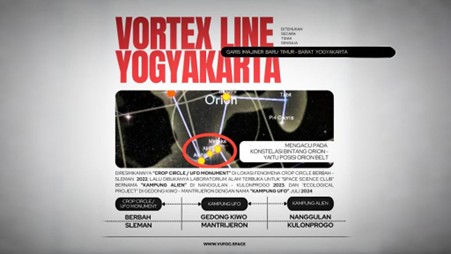
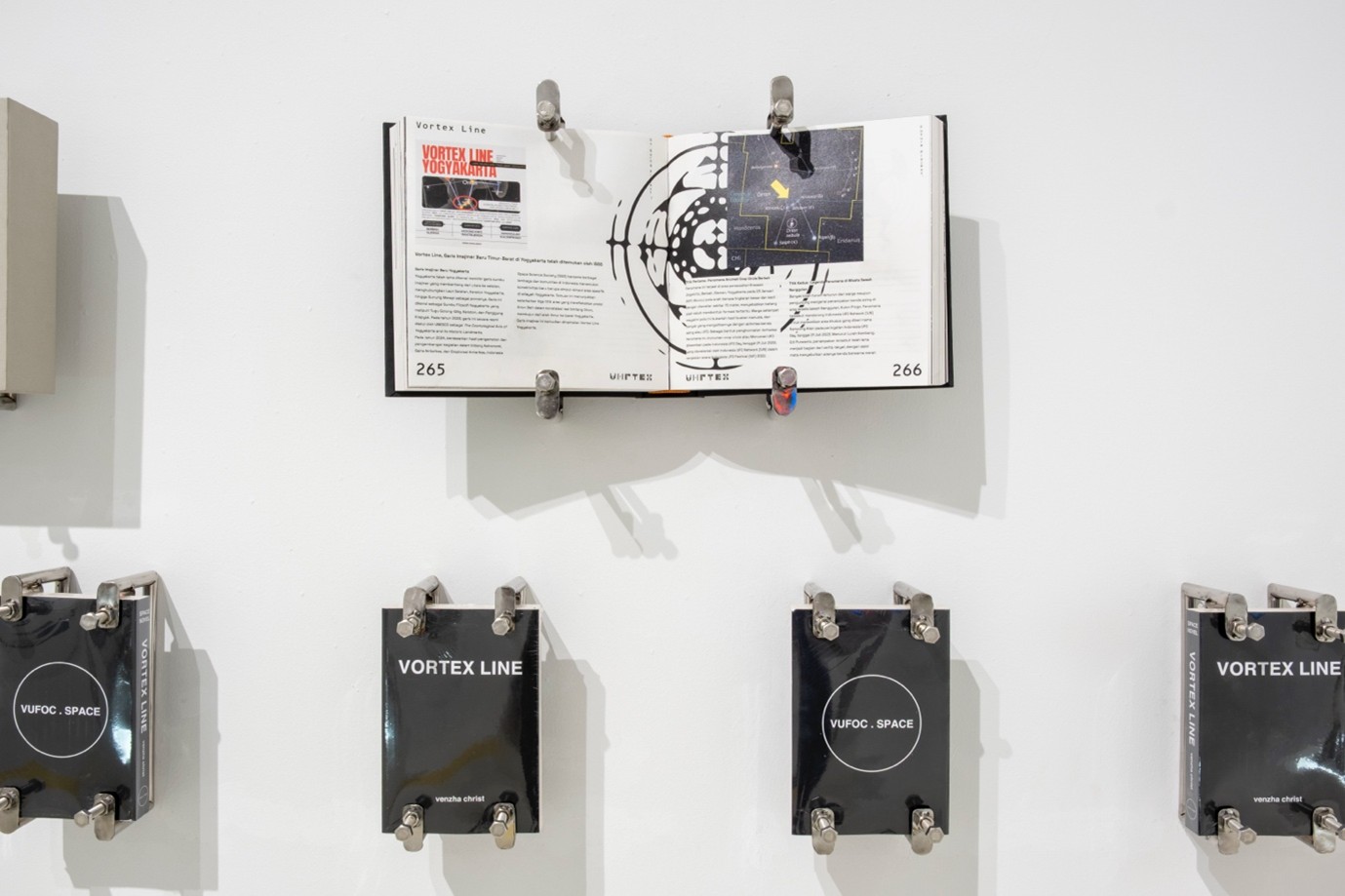
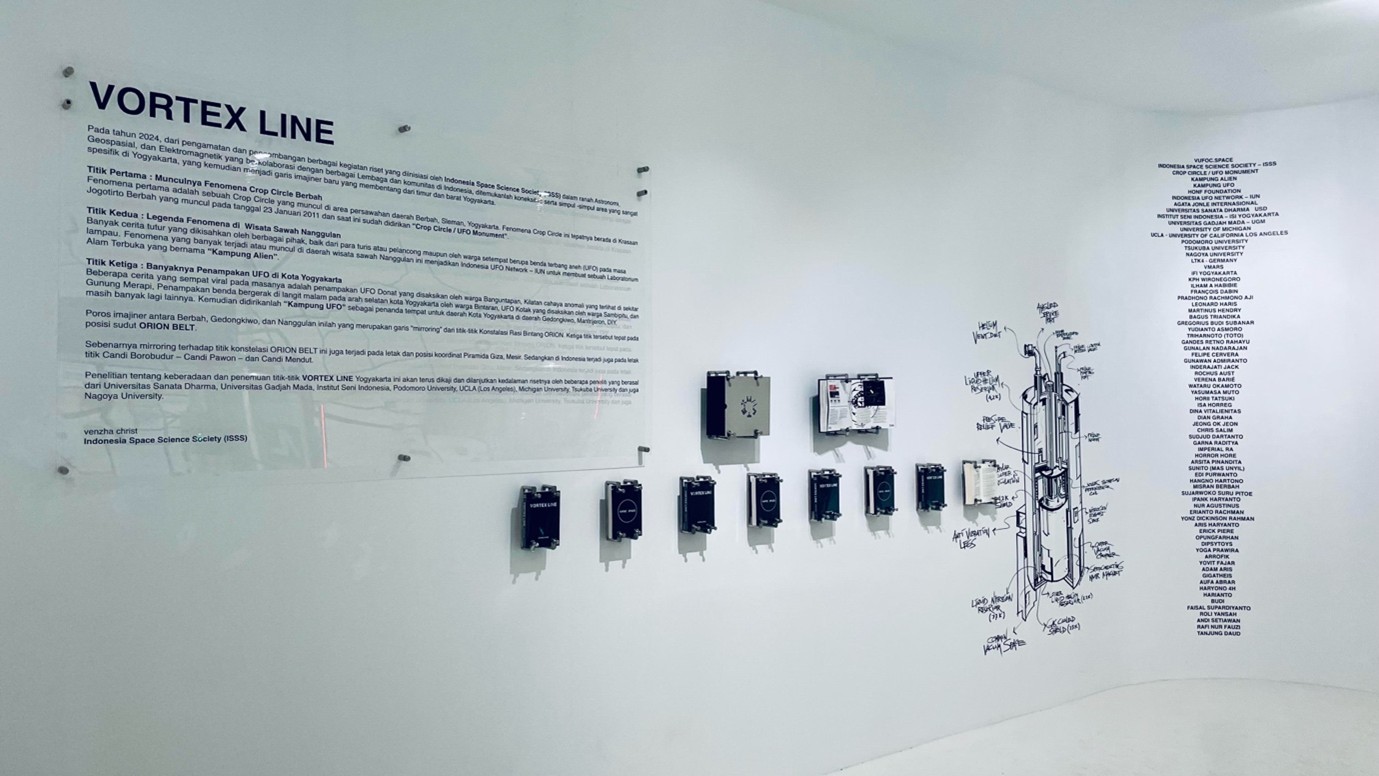
The Vortex Line in Yogyakarta describes an east–west imaginary alignment linking several locations where recurring spatial, environmental, and observational anomalies have been documented, particularly in Berbah, Gedongkiwo, and Nanggulan in the Yogyakarta region of Indonesia. The term “Vortex Line” emerged after observers noticed that the relative positions of these three locations resemble the configuration of Orion’s Belt—a well-known group of three bright stars within the Orion constellation, visible from both hemispheres and historically used across cultures to navigate and interpret the night sky. This resemblance is not intended as astronomical proof or deterministic causality. Instead, Orion’s Belt serves as a cultural and symbolic reference that allows these sites to be interpreted collectively, situating local phenomena within a broader human imagination of the cosmos.
The articulation of the Vortex Line has developed through long-term initiatives led by the Indonesia Space Science Society (ISSS), in collaboration with the v.u.f.o.c Lab, Dapur AI, Indonesian National Institute of Aeronautics and Space, Indonesia UFO Network, VMARS – v.u.f.o.c Mars Analogue Research Station, International SETI Conference, and the Indonesia UFO Festival. Each site connected by the Vortex Line carries distinct local narratives: the crop circle site in Berbah, first documented in 2011 and later marked by a UFO Monument inaugurated on Indonesia UFO Day in 2022; Kampung Alien in Nanggulan, grounded in long-standing oral histories of unusual celestial sightings (2023); and Kampung UFO in Gedongkiwo, shaped by community accounts of unexplained aerial phenomena (2024). Viewed together, these locations form a cultural constellation within the landscape of Yogyakarta.
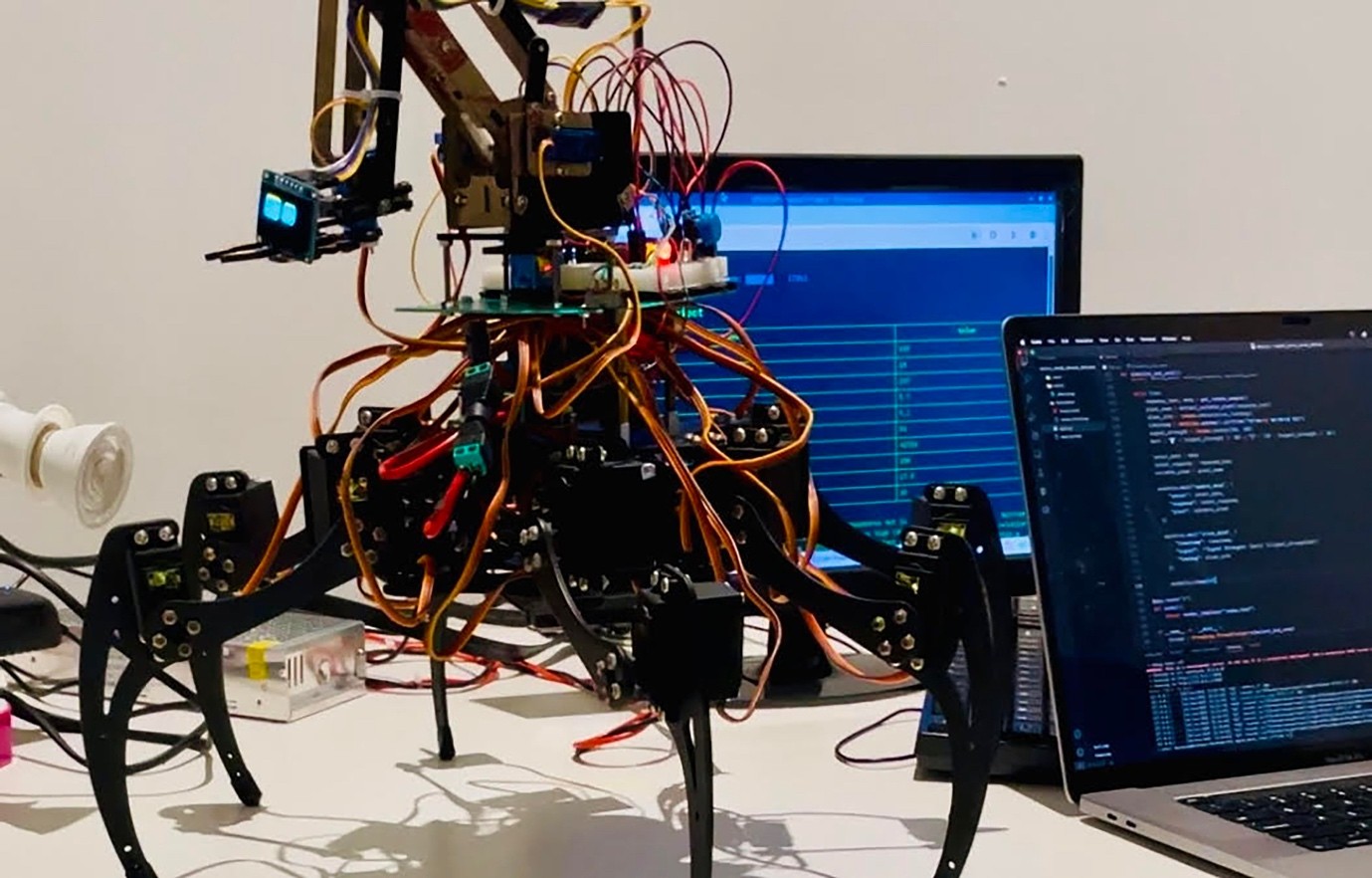
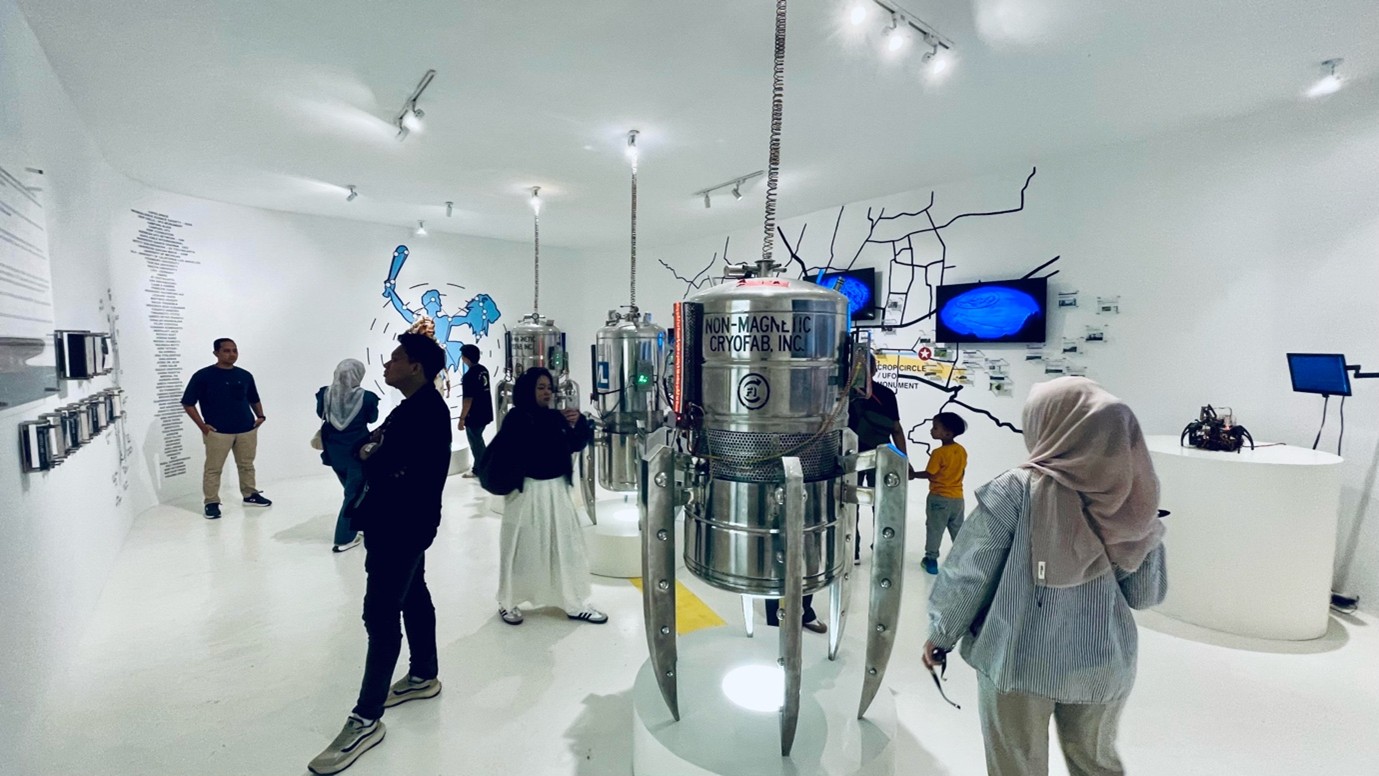
The Vortex Line Project also explores technological approaches through VIR (Vortex Intelligence Robot), an AI-integrated robotic system designed to analyze environmental data and patterns associated with natural anomalies. By connecting mythology, spatial observation, and scientific data, the project explores how digital technologies can support new ways of interpreting natural phenomena while fostering public awareness and strengthening environmental monitoring and disaster mitigation.
Keywords: Indonesia Space Science Society; Vortex Line Yogyakarta; art–science; local cosmology; digital humanities; Indonesia UFO Festival; Vortex Intelligence Robot; VIR; Dapur AI; VMARS
- Introduction
In the digital age, the ways humans interpret space, nature, and anomalous phenomena are increasingly shaped by technological mediation. Satellite imagery, geospatial data, social media, and digital visualization tools have transformed observation into a shared and participatory process. At the same time, this expansion of digital observation often privileges dominant scientific narratives, while marginalizing culturally embedded ways of understanding space.
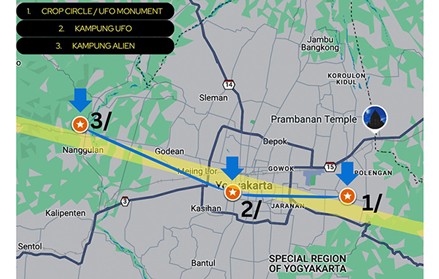
The Vortex Line in Yogyakarta emerges at this intersection. The term “Vortex Line” refers to an east–west imaginary alignment connecting several locations—most notably Berbah, Gedongkiwo, and Nanggulan—where recurring environmental patterns and anomalous observations have been reported over time. The designation does not imply the existence of a literal vortex or a singular causal mechanism. Instead, it operates as a conceptual device that allows these geographically separated sites to be read collectively.
This collective reading is informed by an observed spatial resemblance between the three sites and Orion’s Belt, a widely recognized stellar formation composed of three aligned stars. Across many cultures, Orion has functioned as a reference point in navigating the night sky and constructing cosmological narratives. In the case of the Vortex Line, Orion’s Belt is not invoked as astronomical proof, but as a symbolic and cultural reference that helps articulate how humans connect terrestrial space with cosmic imagination.
- Sites of the Vortex Line :
- Berbah : Crop Circle / UFO Monument
- Nanggulan : Kampung Alien
- Gedongkiwo : Kampung UFO
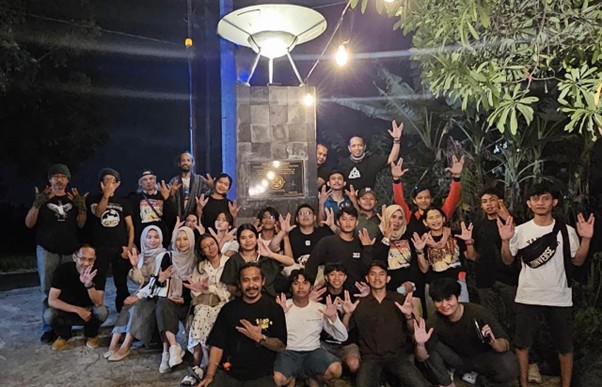
3.1 Berbah: Crop Circle and UFO Monument
One of the earliest phenomena associated with the Vortex Line is the appearance of a crop circle in the rice fields of Krasaan, Jogotirto, Berbah (Sleman) on January 23, 2011. The formation drew public attention due to its unusual circular pattern and the absence of a clear explanation. Over time, the site became a focal point for community discussion and documentation.
In collaboration with local residents and cultural institutions, a Crop Circle/UFO Monument was later established at the site. The monument was inaugurated on Indonesia UFO Day, July 21, 2022, marking the event as part of a longer cultural memory rather than a singular incident.
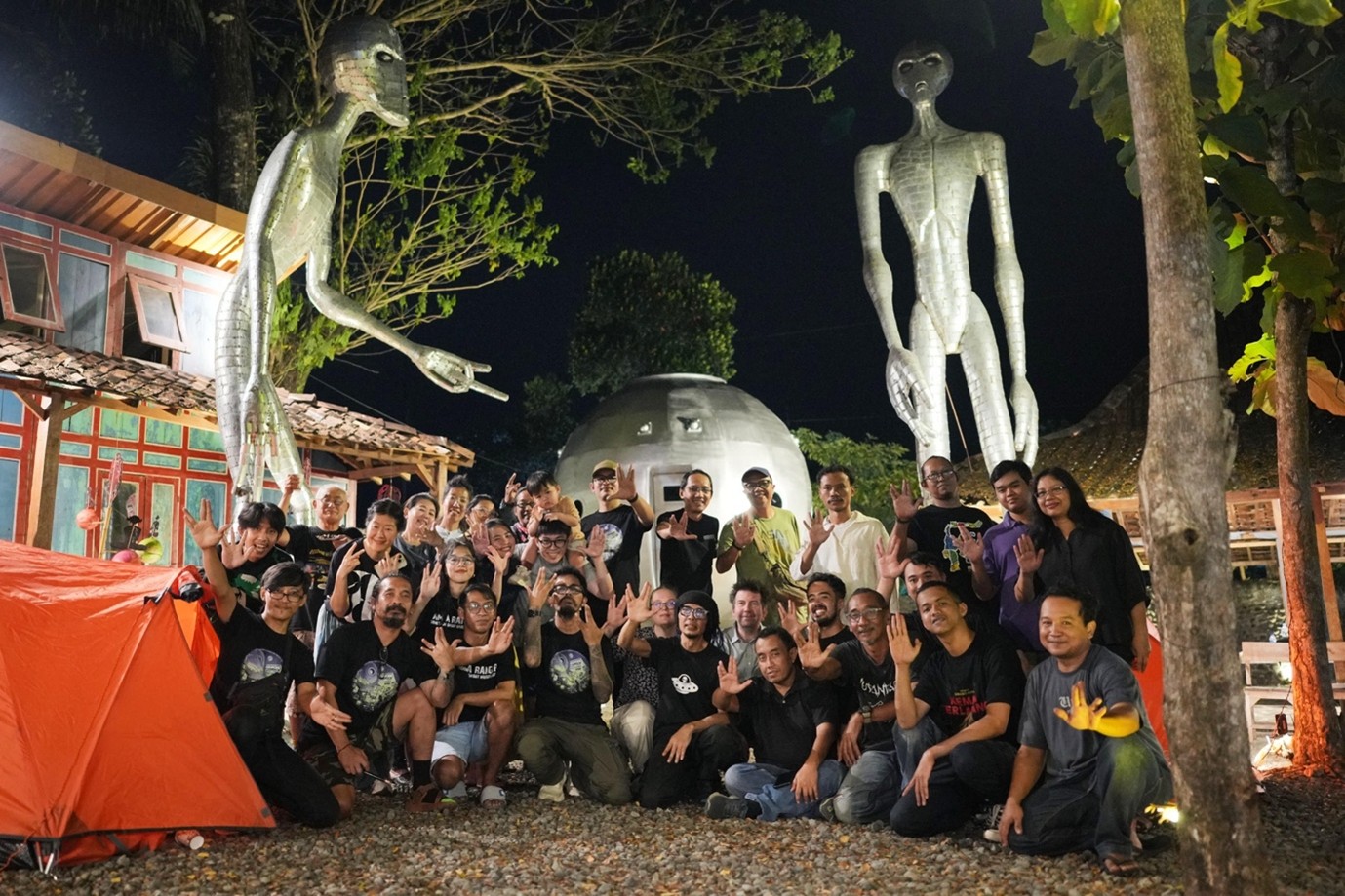
3.2 Nanggulan: Kampung Alien
The Nanggulan area in Kulon Progo has long been associated with oral histories of unusual celestial sightings. These narratives culminated in the designation of Kampung Alien, inaugurated on Indonesia UFO Day in 2023. Here, local memory and spatial experience are treated as valuable cultural data, contributing to the broader reading of the Vortex Line.
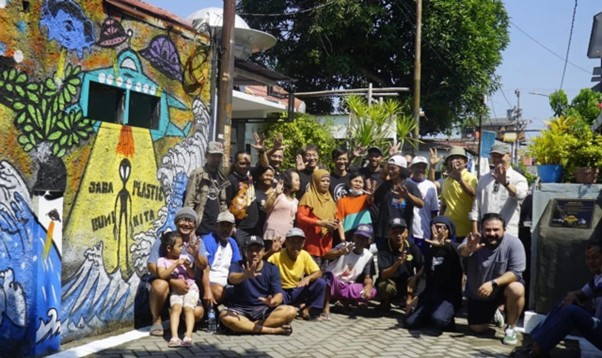
3.3 Gedongkiwo: Kampung UFO
In Gedongkiwo, Yogyakarta City, various community accounts describe sightings of unexplained aerial phenomena, including luminous objects and unusual formations near Mount Merapi. These narratives led to the establishment of Kampung UFO as a cultural marker and educational site (2024). Rather than validating or dismissing these accounts, the initiative provides a space where observation, storytelling, and scientific curiosity intersect.
- Digital Practices and Participatory Knowledge
The articulation of the Vortex Line developed through collaborative practices initiated by the Indonesia Space Science Society (ISSS), operating at the intersection of space science, art, and public education. Digital tools—such as participatory mapping, visual documentation, and online archiving—play a central role in this process.
Rather than asserting authoritative conclusions, these digital platforms function as shared spaces where uncertainty, curiosity, and dialogue are preserved. Contributions from scientists, artists, researchers, and local communities are documented and contextualized, allowing knowledge to remain open-ended and collectively produced.
- Institutional and Academic Collaboration
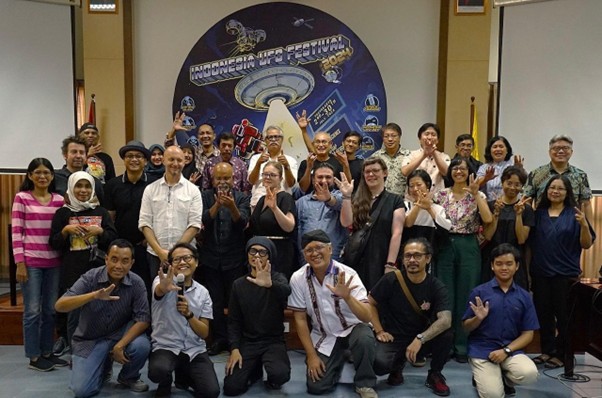
Media reports indicate that research related to the Vortex Line has attracted engagement from a range of academic institutions. These include Sanata Dharma University, Gadjah Mada University, Indonesia Institute of the Arts, and Podomoro University, as well as international institutions such as the Nagoya University, University of California Los Angeles (UCLA), University of Michigan, and University of Tsukuba. These collaborations highlight the transdisciplinary nature of the project, spanning cultural studies, science, and artistic research.
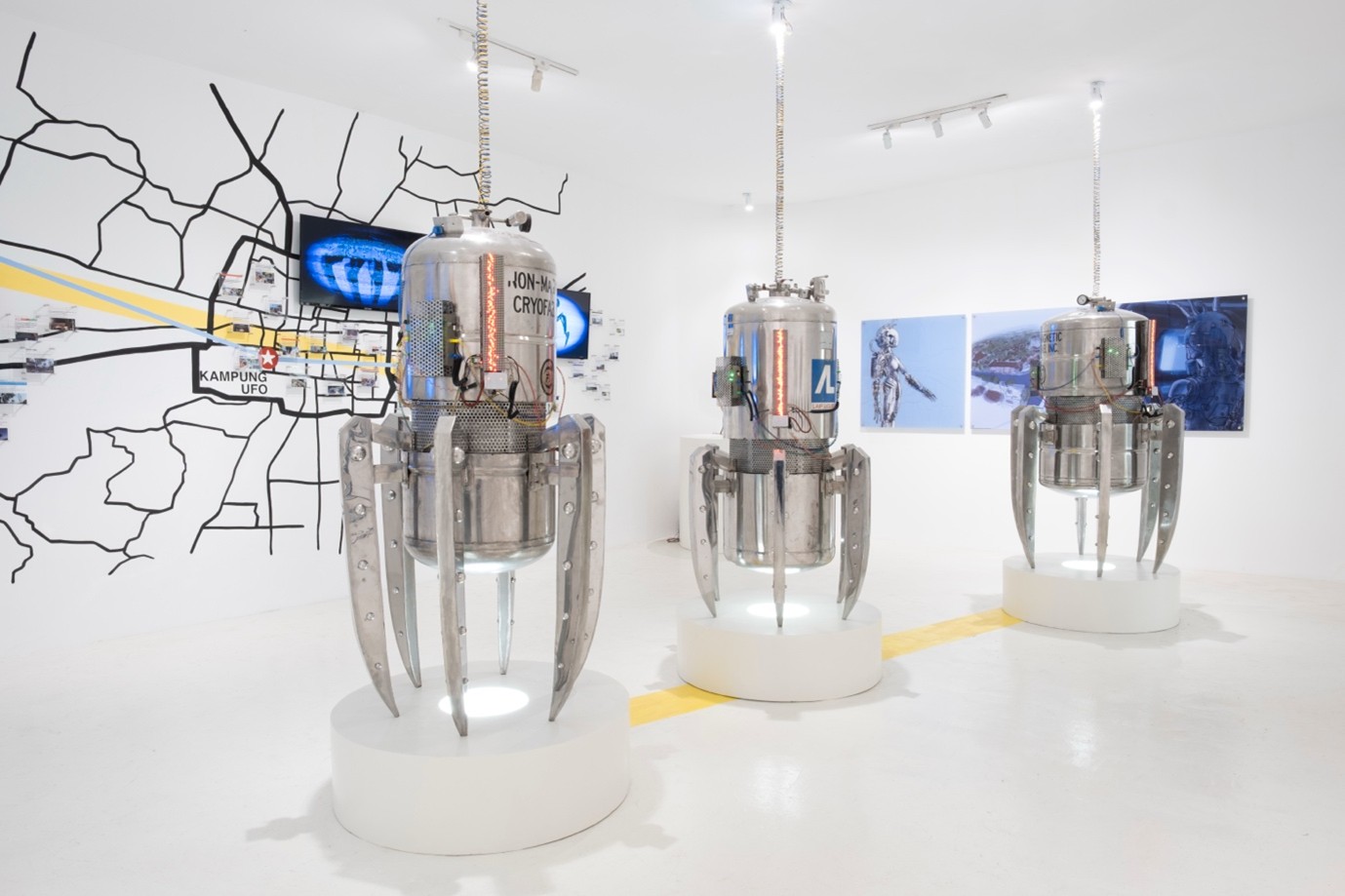
- Festival as a Digital Humanities Interface
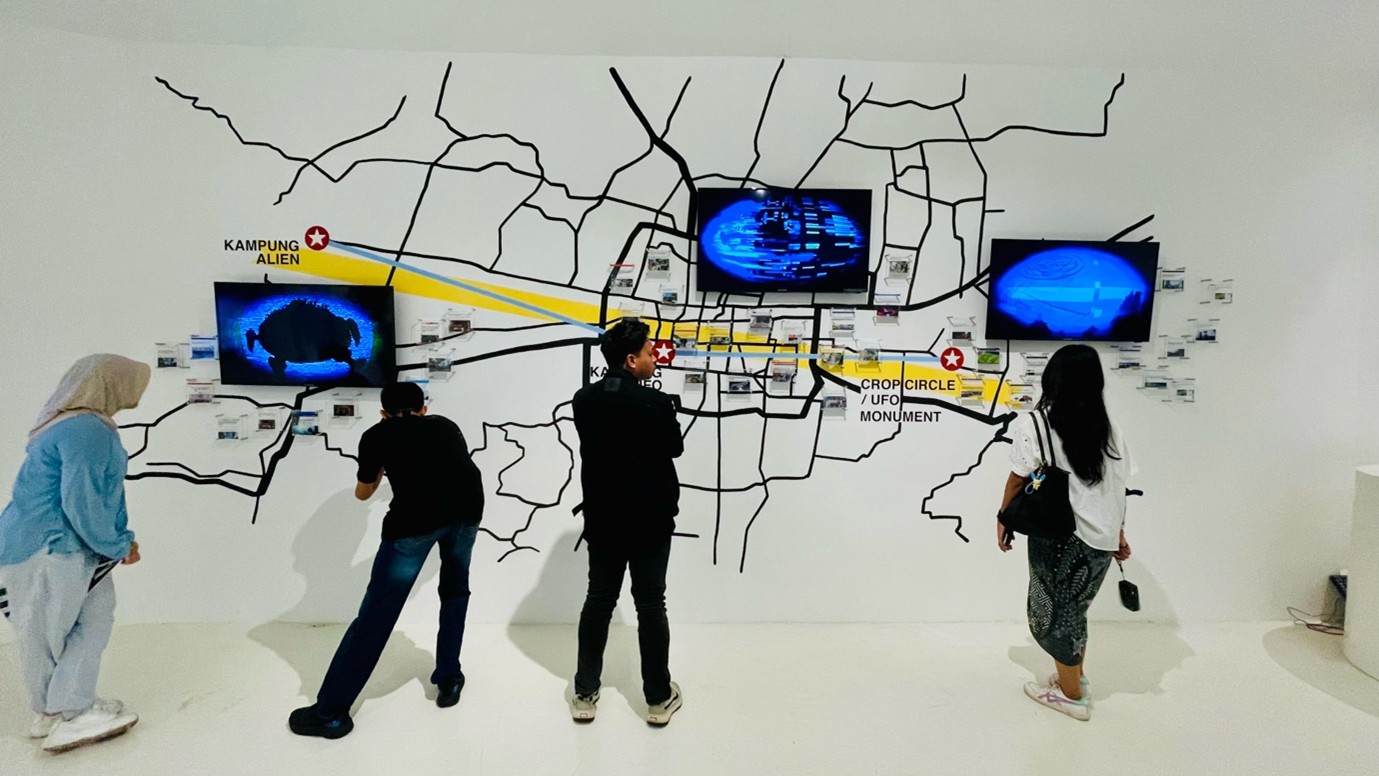
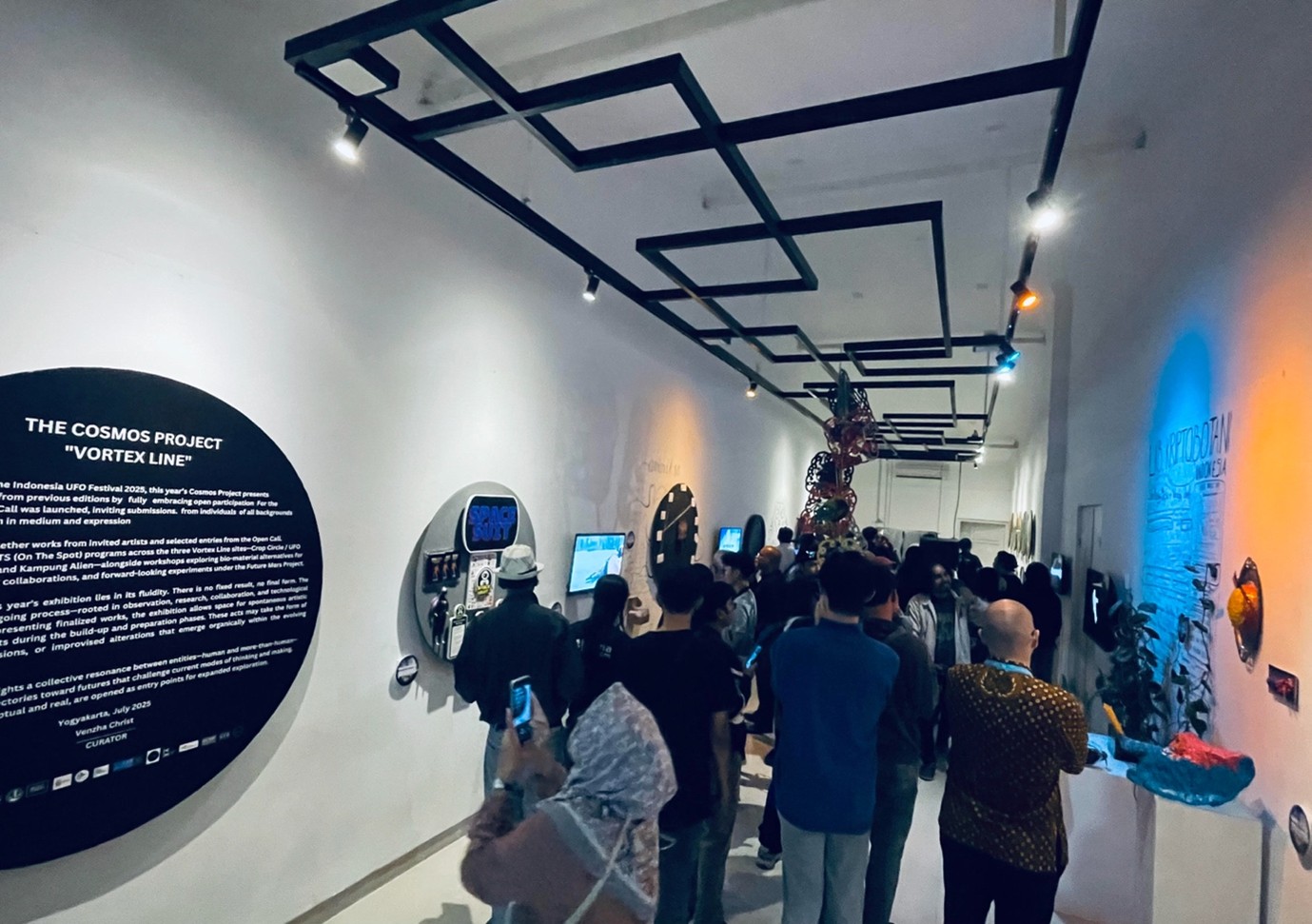
The Indonesia UFO Festival serves as a key public interface for the Vortex Line. Through exhibitions, talks, workshops, and digital visualizations, the festival translates research into embodied and participatory experiences. The Vortex Line has been foregrounded as a thematic focus, allowing visitors to engage with diagrams, narratives, and speculative interpretations rather than fixed conclusions.
This performative and dialogical approach aligns closely with the principles of Digital Humanity, where technology is employed to strengthen social connection, cultural diversity, and critical reflection.
- Space, Mythology, and Digital Humanity
Within the Digital Humanity framework, technology is valued not for efficiency alone, but for its capacity to support human-centered inquiry. The Vortex Line exemplifies this by using digital tools as a translation layer—connecting scientific observation with local cosmology and mythology.
Rather than privileging a single explanatory model, the project embraces plurality. Astronomy, mythology, and lived experience coexist as complementary ways of understanding space, allowing anomalies to function as sites of cultural inquiry rather than problems to be resolved.
- Conclusion
Vortex Line and Local Cosmology in the Digital Age reflects how humans continue to make sense of space amid technological transformation. By integrating digital documentation, participatory engagement, mythology, and scientific curiosity, the Vortex Line functions as a human-centered digital humanities practice rooted in Indonesian cultural contexts.
Its significance lies not in proving anomalies, but in fostering awareness—encouraging communities to observe, document, and reflect on space as a shared cultural and cosmic relationship. In doing so, the Vortex Line aligns with the ethos of Digital Humanity: technology in service of understanding, care, and collective imagination.
Explore VIR :